
The Federal Tax Authority has revised the UAE e-invoicing implementation timeline. But a later deadline does not mean more time to decide — it means businesses have a shorter window to act before implementation queues fill up.
In early 2026, the FTA announced a phased approach to mandatory e-invoicing adoption across the UAE. The updated compliance deadline for businesses with annual revenues of AED 50 million and above is now 30 October 2026 — specifically, the deadline to appoint an Accredited Service Provider. Mandatory live invoicing for this group begins 1 January 2027.
If you are a CEO, finance director, or business owner who has been tracking this requirement from a distance, this is the moment to move from awareness to action. The extension gives you a legal grace period — not a technical one. ERP assessments, data mapping, system testing, and compliance validation do not happen overnight, regardless of what the calendar says.
What the UAE E-Invoicing Mandate Actually Requires
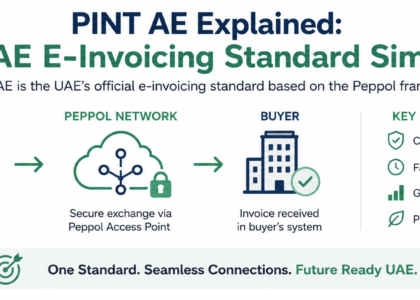
UAE e-invoicing is not a portal upgrade or a new PDF template. It is a structural change to how invoices are created, transmitted, and validated. Once the mandate is live, every invoice your business issues must be a structured, machine-readable document generated in PINT AE (Peppol International Invoice UAE) format — the standardized XML schema adopted by the UAE.
These invoices must pass through an Accredited Service Provider (ASP) — a certified intermediary that validates invoice data and connects your system to the FTA’s invoice exchange network. PDF invoices, scanned documents, and manually entered records will no longer be accepted as valid tax records under UAE law.
That last point matters more than most businesses realize. It is not that your invoices will be flagged or rejected — it is that they will have no legal standing at all.
Why the Extension Does Not Change Your Preparation Timeline
The most common mistake businesses make after a deadline extension is treating it as a restart. The compliance date moved. The implementation work did not.
Getting ready for UAE e-invoicing integration typically involves several stages that run sequentially: an ERP readiness assessment to understand what your current system can and cannot do, data quality review across customer records and tax information, XML mapping to align your invoice fields with PINT AE requirements, integration with an ASP, and end-to-end testing before you go live.
For businesses running older ERP versions, heavily customized accounting environments, or systems that were never designed with structured invoice output in mind, this process takes months — not days.
Worth noting: The gap between “our software handles invoicing fine” and “our software is FTA-compliant” is where most implementation delays occur. An honest ERP readiness assessment is the fastest way to understand how wide that gap actually is for your business.
The UAE E-Invoicing Implementation Timeline at a Glance
Phased rollout — federal tax authority
1 Jul 2026: Pilot phase begins. Selected taxpayers start using the e-invoicing system.
30 Oct 2026: Deadline for businesses with annual revenues of AED 50 million and above to appoint an Accredited Service Provider.
1 Jan 2027: Mandatory e-invoicing goes live for businesses above AED 50 million in annual revenue.
31 Mar 2027: Deadline for smaller businesses (below AED 50 million) to appoint their Accredited Service Provider.
1 Jul 2027: Mandatory e-invoicing takes effect for businesses with annual revenues below AED 50 million.
1 Oct 2027: Full implementation deadline for government entities.
Which Businesses Are at Greatest Risk Right Now
Not every business is equally exposed. The ones that tend to face the most difficult transitions are those running ERP systems that were implemented several years ago without regular updates, businesses with large volumes of B2B invoices across multiple entities, and companies whose invoice data sits across disconnected systems — accounting in one place, VAT calculations in another, customer records somewhere else entirely.
If your finance team currently exports invoices as PDFs from your ERP, attaches them to emails, and files copies in shared drives — that entire workflow will need to change. The question is not whether to change it but how to do it without disrupting the billing cycles your business runs on.
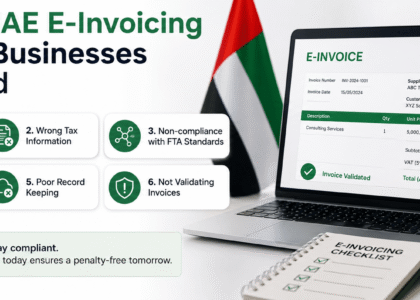
Understanding common UAE e-invoicing mistakes businesses make during implementation can save you significant time and rework down the line.
What to Do Before the October 2026 Deadline
Start with an ERP readiness assessment
Before committing to any implementation approach, you need to know what your current system can actually support. An ERP readiness assessment identifies which invoice fields your system captures today, where data quality gaps exist, and what technical changes are required to generate PINT AE-compliant XML output. This is not a theoretical exercise — it determines how long your implementation will take and what it will cost.
Understand the role of an ASP in your compliance setup
Your ERP handles invoice generation. An Accredited Service Provider handles invoice transmission and validation. These are two different things, and understanding how ERP and ASP work together is essential before you decide on an integration approach. Some businesses assume their existing software will handle everything — that assumption has caused a significant number of compliance failures in other markets where similar mandates have been introduced.
Do not wait for vendor updates
Many businesses are waiting for their ERP vendor to release a “UAE e-invoicing module” before they start planning. This is a reasonable instinct but a risky one. Vendor updates are not always aligned with local compliance deadlines, and the update itself still requires configuration, testing, and validation on your specific system. The update is a starting point, not a finish line.
Map your invoice data to PINT AE requirements now
The PINT AE invoice standard defines specific mandatory data fields — including supplier and buyer TRN, tax codes, invoice totals, and line-item detail. If any of these are missing, incomplete, or incorrectly formatted in your current system, your invoices will fail validation. Identifying and fixing data quality issues takes time that most businesses underestimate.
A Note on Smaller Businesses
If your annual revenue falls below AED 50 million, your ASP appointment deadline is 31 March 2027 and mandatory compliance begins 1 July 2027. That gives you additional time — but the implementation process is the same. The businesses that use that time well will have a far less disruptive transition than those that wait until early 2027 to start.
The Cost of Delay Is Not Just Financial
Businesses that miss the UAE e-invoicing compliance deadline or issue non-compliant invoices after the mandate goes live will face more than FTA penalties. Their invoices will have no legal standing for VAT reclaim purposes. Their trading partners — particularly larger enterprises and government-linked organizations — may reject invoices that have not passed through an approved exchange network. And the remediation work required after a failed implementation is typically far more expensive than a well-planned one.
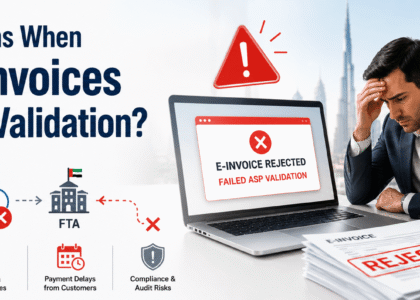
It is also worth understanding that once the system is live, individual invoice rejections and system failures carry their own penalty obligations. The consequences of ASP validation failures and FTA reporting requirements are a separate compliance risk that businesses only encounter after go-live, which is another reason getting the integration right from the start matters.
Starting now, with a clear understanding of your current ERP environment and a realistic view of what compliance actually requires, is the most cost-effective decision available to you before the October deadline.
If you are ready to assess your current setup and build a practical UAE e-invoicing integration plan before the compliance window closes, the right time to start is today.
Frequently Asked Questions
What was the original UAE e-invoicing deadline, and why was it extended?
The original deadline for large businesses to appoint an Accredited Service Provider was 31 July 2026. The Federal Tax Authority extended this to 30 October 2026, giving businesses additional time to prepare. Mandatory live invoicing for businesses with annual revenues of AED 50 million and above still begins 1 January 2027. Always verify the latest guidance directly with the FTA, as timelines may be updated.
Is the ASP appointment deadline the same as the e-invoicing go-live date?
No. The 30 October 2026 date is the deadline to appoint an ASP. Mandatory e-invoicing for large businesses goes live on 1 January 2027. However, the onboarding, integration, and testing work required to be ready by January needs to begin well before October.
Not sure where your ERP stands against the UAE e-invoicing requirements? Start with a readiness assessment before the implementation timeline closes.